Amateur Radio Station
JH1KYI
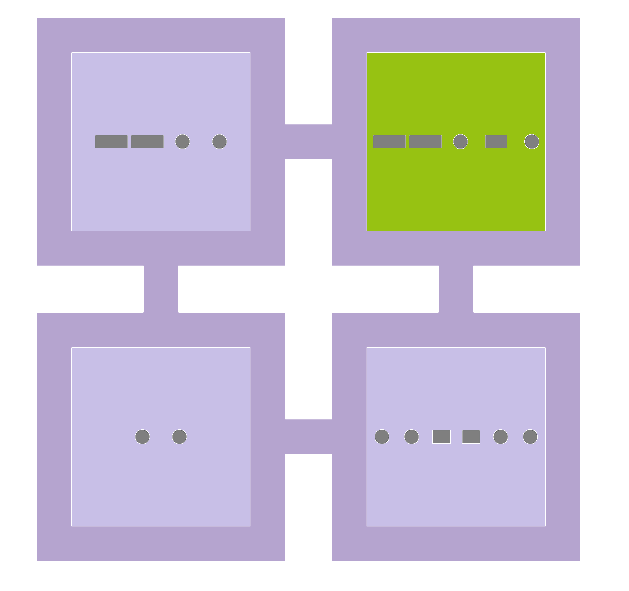
Morse code: daily training for the mind
「見知らぬ人との会話」幸福感を高めてくれるハムライフに感謝。
“More than a hobby, less than medicine — radio is a sport for the brain.”
Station information
| Item | Details |
|---|---|
| Callsign | JH1KYI |
| Name (handle) | Fujito Yoshinori (Nori) 藤戸良憲 |
| Location | Nishiogikubo, Suginami, Tokyo 東京都杉並区西荻窪 |
| Grid locator | TM95TQ |
| Licences | 1st Class Amateur Radio Operator 第1級アマチュア無線技士 1st Class Radio Engineer (Land)第1級陸上無線技術士 |
| Station established | April 2021 |
| Club affiliation | Musashino Club (JA1YSW) 武蔵野クラブ所属 |
| Other activities | Tokyo Radio Spectrum Proper-Use Promoter |
| HF transceiver (all modes, all bands) | YAESU FT-991A |
| V/UHF transceiver (all modes, 144 / 430 / 1200 MHz) | ICOM IC-9700 |
| HF antennas | 3-element Yagi tribander at 13 m AGL (14 / 21 / 28 MHz) Vertical + ATU (FC40) at 10 m AGL |
| V/UHF antenna | V2000 GP at 13 m AGL |
🧠 Radio as a workout for the brain
Morse communication demands three rapid, continuous actions: listen, retain, and respond. That cycle — repeated in real time, QSO after QSO — naturally sharpens concentration and working memory. Every contact is, in effect, a session at the mental gym.
“More than a hobby, less than medicine — radio is a sport for the brain.”
Why not become a ‘brain-active operator’ on the airwaves today?
More than a hobby
Not just pastime — it brings learning, a sense of achievement, and genuine connection with others.
Less than medicine
Not a clinical intervention, but continued practice is associated with real cognitive benefits.
Sport for the brain
CW, DX operation, and digital modes (FT8 etc.) all stimulate thinking, memory, and quick reaction.
Even as we get older, many of us want intellectual stimulation and fresh challenges. Amateur radio fits that desire perfectly. English-language contacts and digital modes reinforce logical thinking almost without noticing it. This is a hobby where you use your head, move your hands, and connect with the world — cognitive training built quietly into each day.
About the operator
Hello — I am Fujito Yoshinori (handle: Nori), JH1KYI, based in Suginami, Tokyo. Since opening my station in April 2021 I have tried a wide range of modes: phone, FT8, and CW. After roughly two years, I settled on CW as my primary mode, and that is where I spend most of my time on air. I am grateful to every station that has worked me so far.
My HF setup is a YAESU FT-991A driving a 3-element tribander Yagi (14 / 21 / 28 MHz) at 13 metres AGL, plus a vertical with an ATU (FC40) at 10 metres. For V/UHF, I use an ICOM IC-9700 with a V2000 GP at 13 metres.
I hold the 1st Class Amateur Radio Operator licence and the 1st Class Radio Engineer (Land) qualification. I operate across 7–50 MHz on HF and 144–1200 MHz on V/UHF. My CW copying speed is currently around 20 wpm (Latin characters); Japanese Morse (wabun CW) is still very slow — barely at QSO level, if at all. I keep working at it, aiming for fluent wabun contacts and higher-speed Latin CW in due course.
One of my favourite pursuits is using the Reverse Beacon Network to spot CQ stations and then calling them. Most contacts are 599 BK style for now, but my goal is to enjoy proper conversational wabun QSOs before long.
I work as a professional translator, and I find that translation and Morse communication share a common essence: accurately understanding and conveying meaning. That parallel is part of what makes both pursuits so rewarding. Now in my seventies, in this era of a 100-year life, I feel fortunate to continue enjoying both my work and my hobby. Through calm, meaningful contacts with stations in Japan and overseas, I keep discovering the richness of radio communication and human connection.
QSL policy
I support electronic QSL card exchange via hQSL, eQSL, and LoTW.
電子 QSL のみに対応いたします。 hQSL, eQSL, and LoTW.
Contest QSOs: No QSL, please.
紙QSLカード: 届いた紙カードには、返送を心がけますが、期間を要しますことご容赦ください。
コンテストでのQSLカードは、NO QSLとさせていただきます。